



CAL creates outside-the-box legal mechanisms that give motivated individuals the ability to promote human rights norms by enforcing their own rights.
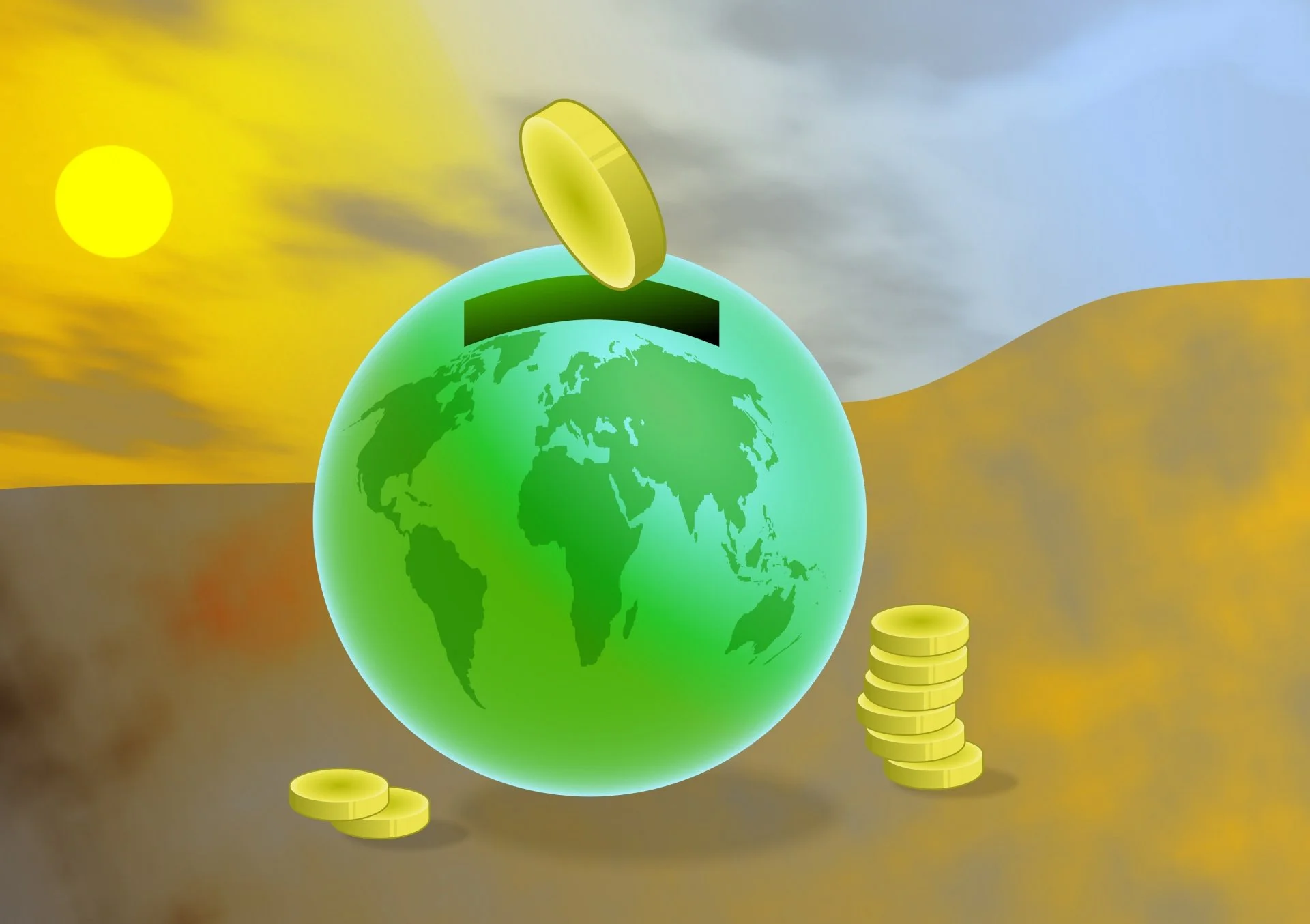
This year, states will begin implementing a global minimum tax rate of fifteen percent on multinational corporations with more than €750 million (about $810 million) in revenues. If these tax reforms succeed in increasing tax revenues across the approximately 140 implementing countries as they intend, these additional funds could be used to advance the social and economic rights of their citizens, especially for the most vulnerable populations, including those whose rights have been abused by corporations historically. However, the coming tax reforms are still so riddled with gray areas regarding form and function that it is too early to call the initiative a victory in corporate accountability.
Durante los 365 días desde que se bloqueó la entrada de su azúcar a los Estados Unidos por trabajo forzoso, el Central Romana ha optado por implementar sólo cambios superficiales para los cañeros y utilizar estrategias políticas en un aparente intento de hacer desaparecer la WRO.
Over the 365 days since its sugar was blocked from entering the United States, Central Romana has chosen to implement only superficial changes for workers while pulling political strings in an apparent effort to make the import ban disappear.
Last month, The Guardian revealed that Canadian pipeline company Enbridge has paid Minnesota police more than two and a half million dollars for services including the surveillance and arrest of Water Protectors resisting the company’s construction of a new Line 3 pipeline. This post situates the Enbridge-police agreement in Minnesota and violent crackdown against Water Protectors at Line 3 within a disturbing global context rooted in colonialism.
In 2019, CAL partnered with EarthRights International to update their Guide to the Foreign Legal Assistance statute. Given that the US is an increasingly difficult jurisdiction for transnational human rights cases against companies, this tool provides an opportunity for workers and community members to access key evidence located in the US even where they may not have been able to bring suit there.
CAL creates outside-the-box legal mechanisms that give motivated individuals the ability to promote human rights norms by enforcing their own rights.

I knew Charity, the Legal Director and co-founder of CAL, professionally for years. During law school, I spent a summer in DC for an internship, and one night I caught a glimpse of what would become CAL. Charity and some of her law school friends (one of whom would be CAL’s other co-founder) were sitting around brainstorming ideas for legal innovations for corporate accountability.
14 manufacturers. 178 factories across the globe. New rights for thousands of workers and affected communities. This is the initial result of Corporate Accountability Lab’s new test case, showing the potential to revolutionize the way companies do business, and to benefit millions of workers and affected communities producing for the US market.
This week, the AP reported that an estimated one million people, mostly Chinese Muslims, were being held in just one of multiple internment camps in the Xinjiang region of China, and producing sportswear for the US market. Here we lay out four key facts about this case that show how “business as usual” has failed to protect workers and the environment on a massive scale.
This week, we’re lighting candles for a speedy recovery since Ruth Bader Ginsburg’s fall and fractured ribs on November 7, 2018. RBG’s reputation as a brilliant jurist, women’s rights advocate, and overall spicy human is widely appreciated. Just admit it: you wish you were RBG. You’re even jealous of her work out.
Here at Corporate Accountability Lab, we focus on global supply chains. We talk about forced labor in China and poverty wages in Bangladesh. We talk about workers producing for the US market who lack the most basic protections. And we do this as attorneys, with top notch educations, leveraging the power of our privilege to fight for human rights and the environment. But I’m going to get personal here.
Earlier this year, advocates and tech workers successfully lobbied Google to abandon a project with the Pentagon, code-named “Project Maven.” Google’s role in the project was to provide artificial intelligence (AI) that would analyze massive amounts of surveillance data for drones. I imagine if you did a survey of human reactions to enlisting artificial intelligence to figure out who to kill with a drone, the average person would check the box next to “dystopic hellscape.”
There has been some speculation about whether anti-dumping statutes could be put to good use in a human rights context. This speculation stems in part from a case filed in 2004 by the Southern Shrimp Alliance at the International Trade Commission (ITC), challenging the alleged dumping of Thai shrimp (notoriously forced-labor produced). While the shrimp case (discussed further below) did not specifically allege forced labor, it raised the question of whether anti-dumping claims could be used to challenge forced labor and other widespread abuses that suppress the consumer price of various imports.
One of the best documented and long-standing cases of corporate abuse in the world is the case of the Ogoni people of the Niger Delta and their decades-long struggle with Shell. As a multinational oil company, Shell has subsidiaries across the world, extracting the world’s hottest commodity from Australia to Venezuela.
In part 2, I described how the intellectual property (“IP”) morals clause has enormous potential for economic activism. It’s something that we badly need if we want to ensure that our own IP doesn’t end up fueling unethical supply chains, and it’s something that nobody currently uses.
In a classic 5-4 split, the Supreme Court ruled today that foreign corporations cannot be sued for egregious human rights violations under the Alien Tort Statute. Here is our fast-and-dirty take on the opinion. In short: the majority’s opinion appears to have more to do with market fundamentalism than the administration of justice, and sets a problematic precedent for victims’ access to remedy.
In part 1, I described the creation of the +CAL copyright licenses. I explained how and why our licenses ensure that the people and environmental inputs that comprise global supply chains are protected by the same “duty of care” that we have as consumers in the United States. Wonky lawyers may be quick to see why this is big deal, but fortunately we’re not all wonky lawyers. In this part, I’m going to discuss in economic terms why our licenses are exciting and why they lay the groundwork for a new frontier in economic activism.
Background
In March 2017, I began working with CAL on a copyright license. Our intent was to create a license that could be used by anyone to condition the use of their copyrighted works on the user’s *contractually enforceable* promise to protect human rights and the environment across the supply chains in which the copyright is used. This is a three-part post is about the creation of the license, the discovery of some exciting new potential for intellectual property commons and economic activism, and the birth of a new folk hero of the commons named activistartmachine. You can shortcut to our software license here and our Creative Commons Plus license here.
So, it’s December 20. You meant to finish your Christmas shopping early this year, like you do every year, but then life happened and here you are. Again. You want to shop local, ethical, blah blah blah, but it’s too late to order from Etsy, you missed the renegade craft fair, and there is just nothing at Ten Thousand Villages your dad would tolerate. And let’s be serious, you don’t have time for hand-making gifts for 20 people.
Environmental and human rights activists and organizations have acquired some serious enemies. Most of us know that challenging the world’s most powerful corporations is a risky business, but how risky is it?
Last week, Amnesty International released a damning report examining the role played by Shell Oil in human rights violations against the Ogoni people in Nigeria.
As we reflect on our first year in operation, we find much to be grateful for. In this short time, we have not only established a terrific board of directors, an impressive group of subject matter advisors, and obtained our 501(c)(3) tax-exempt status, we have made extraordinary progress on our substantive work as a lab.
This hour is well worth your time if you are interested in human rights law in the United States. If their conclusion about Jesner is correct, and corporate liability becomes more limited, we need to be ready with new strategies. That's what we're up to here at the Lab.
On October 11, 2017, the United States Supreme Court will hear oral argument in a case called Jesner v. Arab Bank, in which 6000 victims of terrorist acts allege that the Arab Bank enabled terrorism through serving as the financial institution of terrorist organizations. This case stands out from the pack of human rights-related Alien Tort Statute (ATS) cases on the facts in some ways, but it is the vehicle by which the Court may finally decide if corporations can be sued under the ATS.
Nike boasts of empowering women, but its garment workers tell a different story. Can you imagine the irony of sowing Equality on a shirt for a brand which is complicit in the firing of pregnant women? Wage theft? Mass faintings? Union-busting? While Nike markets themselves as champions of women’s equality, the abuses behind their factory doors expose that the only thing they champion is their own bottom line.


