Investigative Reports
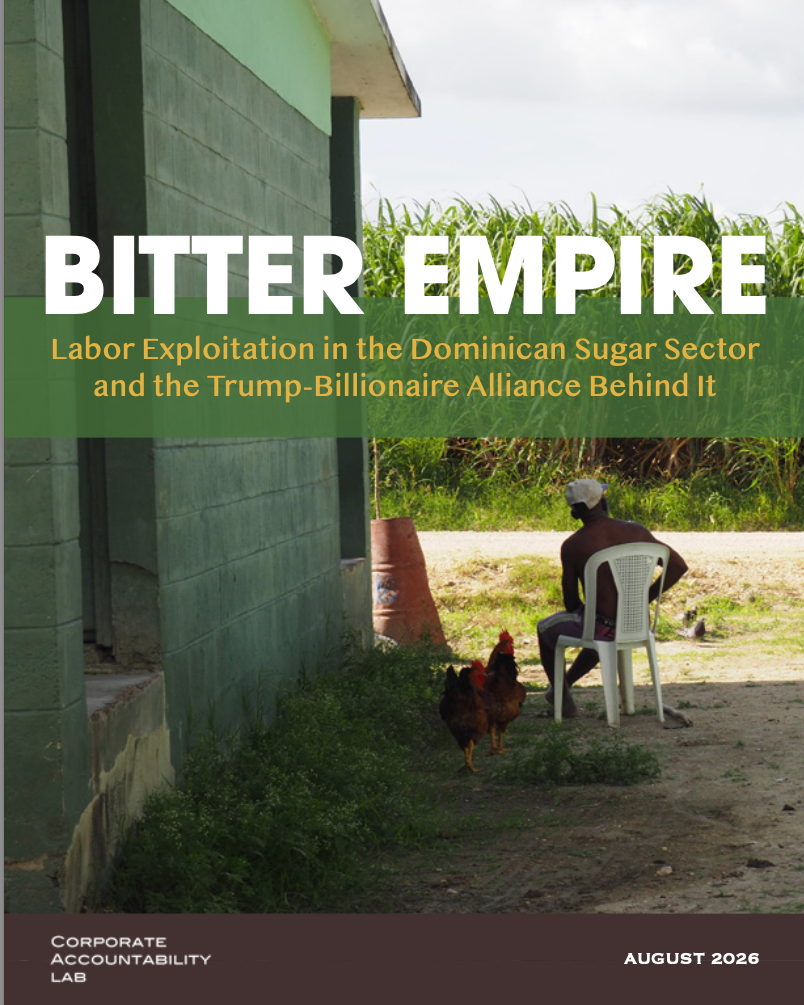
August 2026
For over three years, CAL has been investigating labor conditions in the Dominican Republic's sugar industry. Through extensive field research and worker interviews, our investigation examines ongoing allegations of forced labor against the country’s largest sugar producer, Central Romana, and explores the U.S. government’s 2025 decision to lift its import ban on the company’s sugar despite workers continuing to report many of the same abusive conditions that prompted the original enforcement action. This report highlights a stark contradiction at the heart of U.S. trade policy: while the government publicly condemns forced labor—and advocates that other countries adopt bans on the importation of goods tainted by it—U.S. market access continues to be available to foreign industries in which reported abuse is widespread. As long as sugar and other well-positioned interests enjoy the benefits of such market access while failing to address reports of labor rights abuses in their supply chains, U.S. policy will risk complicity in the very kinds of abuse it claims to oppose.
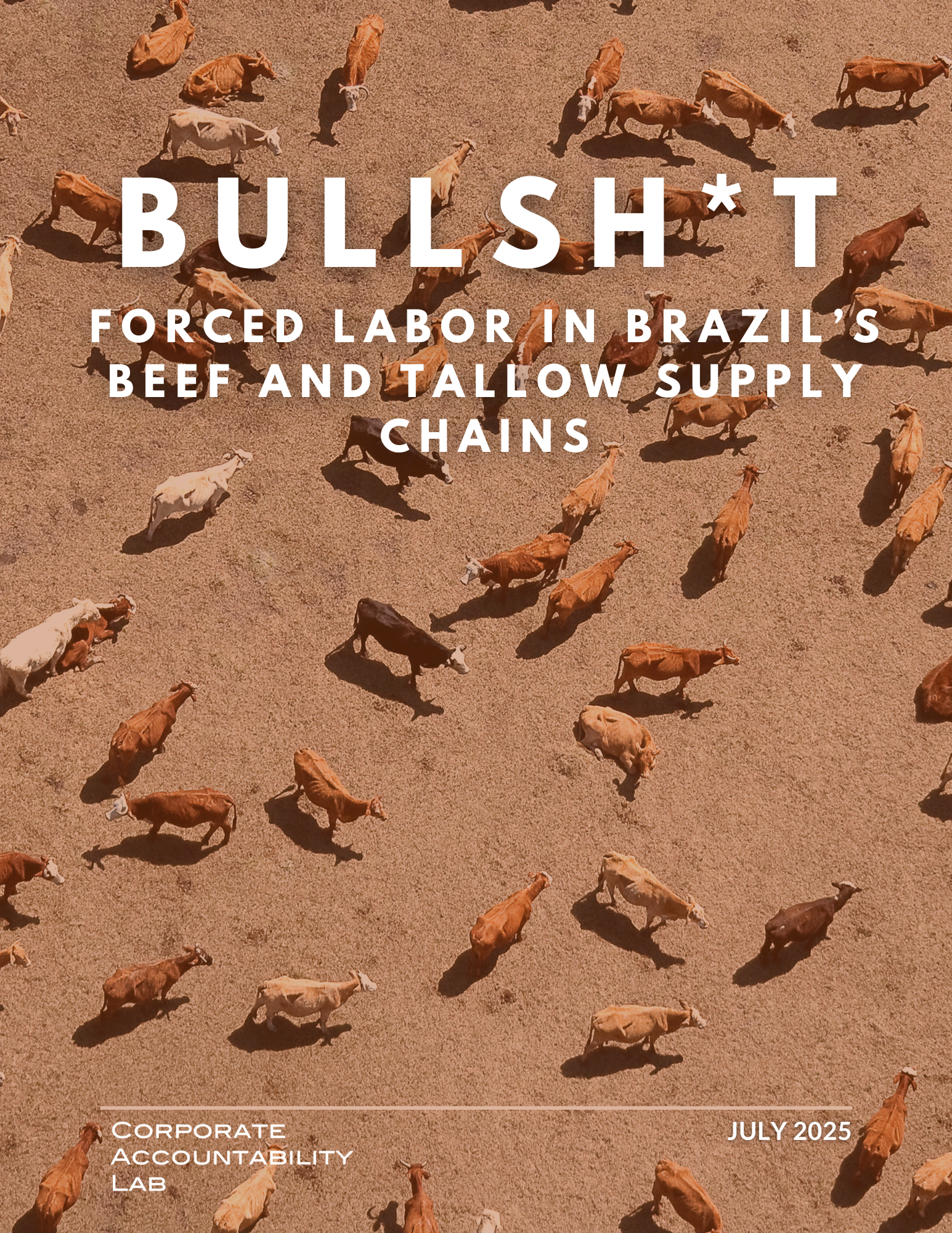
July 2025
Bullsh*t underscores the magnitude of forced labor in the cattle sector and underscores a critical insight: this is not just a problem for Brazil. It is a global scourge that impacts U.S. consumers, U.S. cattle ranchers, and U.S. biofuel producers. Ethically tainted Brazilian beef and tallow have contaminated U.S. supply chains, undercutting the market for ethically-produced beef. Absent robust legal enforcement in the United States and Brazil, meat companies that disregard protections for workers, deforestation prohibitions, anticorruption laws, and antitrust regulation will eventually drive ethical companies – including small U.S. cattle ranchers – out of the market entirely. There are abundant opportunities, and a significant body of evidence, to support scaled up enforcement in both the United States and Brazil. Building on existing enforcement actions in both countries, authorities are well-poised to tackle infractions across the supply chain, from the cattle ranches in rural Brazil all the way to Wall Street.

November 2024
In 2020, Horn of Africa Charity Organisation (HOACO) began an inquiry into wage theft in the frankincense industry in Somaliland and harm to rare frankincense forests, and engaged Corporate Accountability Lab (CAL) in 2021. The trail led to a U.S.-based essential oil company and allegations indicative of a far-reaching and diverse criminal enterprise, including theft, egregious labor violations, bribery, sex trafficking, and rape or assault of hundreds of women and girls.
This report describes those allegations and CAL’s and HOACO’s recommendations for how doTERRA, the U.S.-based essential oil company that purchased scandal-tainted frankincense from Somaliland for an extended period of time, should proceed.

March 2024
Over the past decade, India has emerged as the United States’ leading source of shrimp, the most consumed seafood in the country. However, this success is marred by a production process that relies on forced labor, dangerous and abusive working conditions, and environmental destruction to meet demands for ever-lower prices. While countries like Thailand, China, and Bangladesh have faced criticism for similar abuses, India, which supplies almost 40 percent of U.S. shrimp imports, has remained under the radar with little public scrutiny – until now.
This report challenges the current narrative and issues an urgent call to action. As demand for shrimp continues to grow, so must the pressure on companies and governments to identify and remedy the sector’s pervasive forced labor, abusive conditions, and environmental harms.
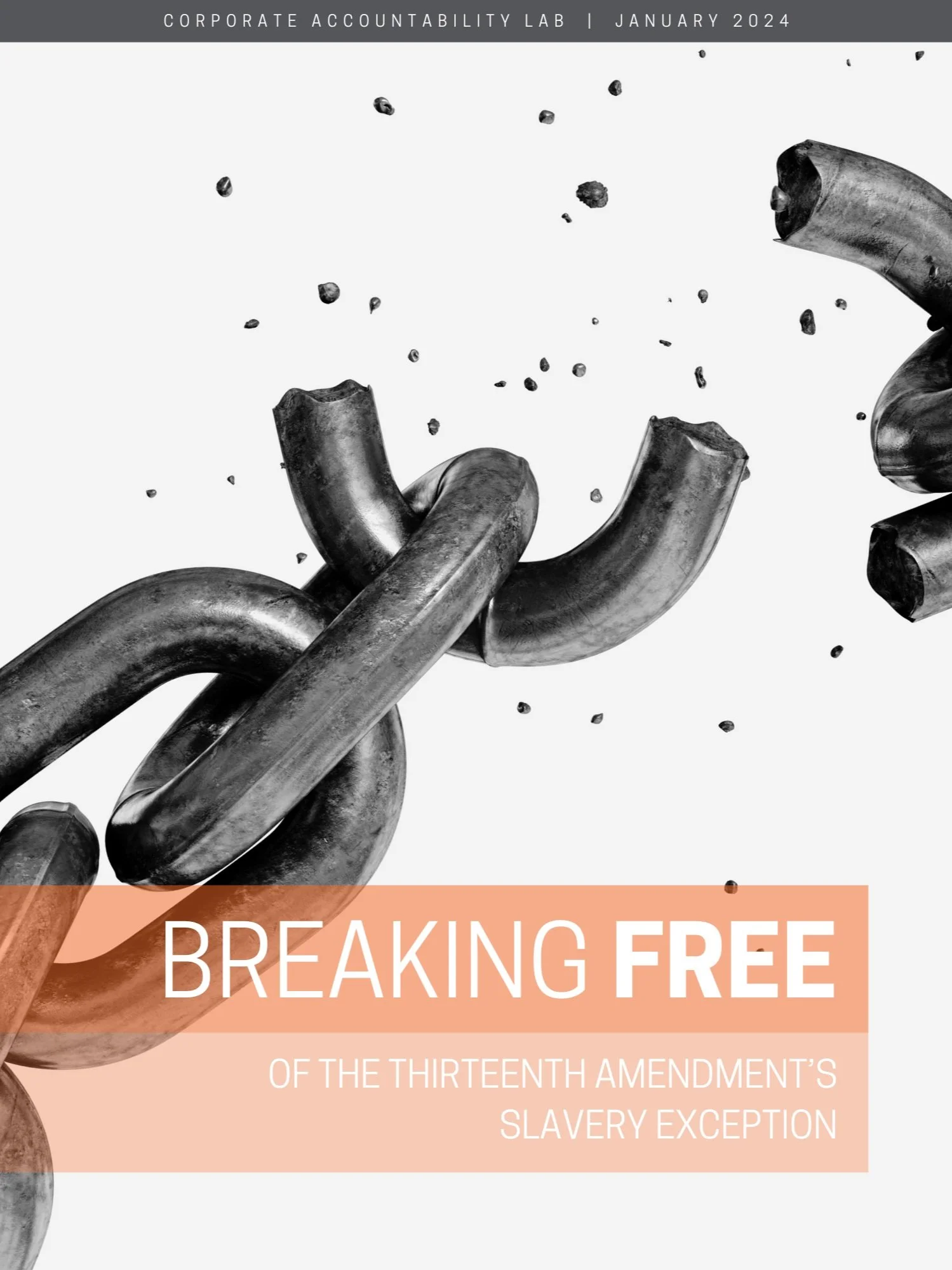
January 2024
In this report, we build on the information in Convicted by providing deeper analysis – punctuated by stories of specific companies and commentary by currently incarcerated workers – of how private stakeholders profit from U.S. prison industries, and by weaving throughout the report immediately actionable recommendations for federal and state policymakers, companies, and lawyers and advocates. Like a road sign pointing drivers toward the avenue not yet taken – but plotted and visible – this report is intended to catalyze movement toward the creation of a domestic economy no longer dependent on the exploitation of cheap, captive, convicted, and frequently Black, Latinx, and Indigenous, labor.
The prison labor system – which generates tremendous wealth for states and private actors alike – is emblematic of a deeply entrenched national commitment to both capitalism and race-based labor exploitation. This report adds to the tremendous canon of evidence – collected since the nation’s founding – making clear that the United States’ economic engine remains tethered to a cheap, captive, and convicted workforce.
The report also makes clear that there are ways to break free.
October 2023
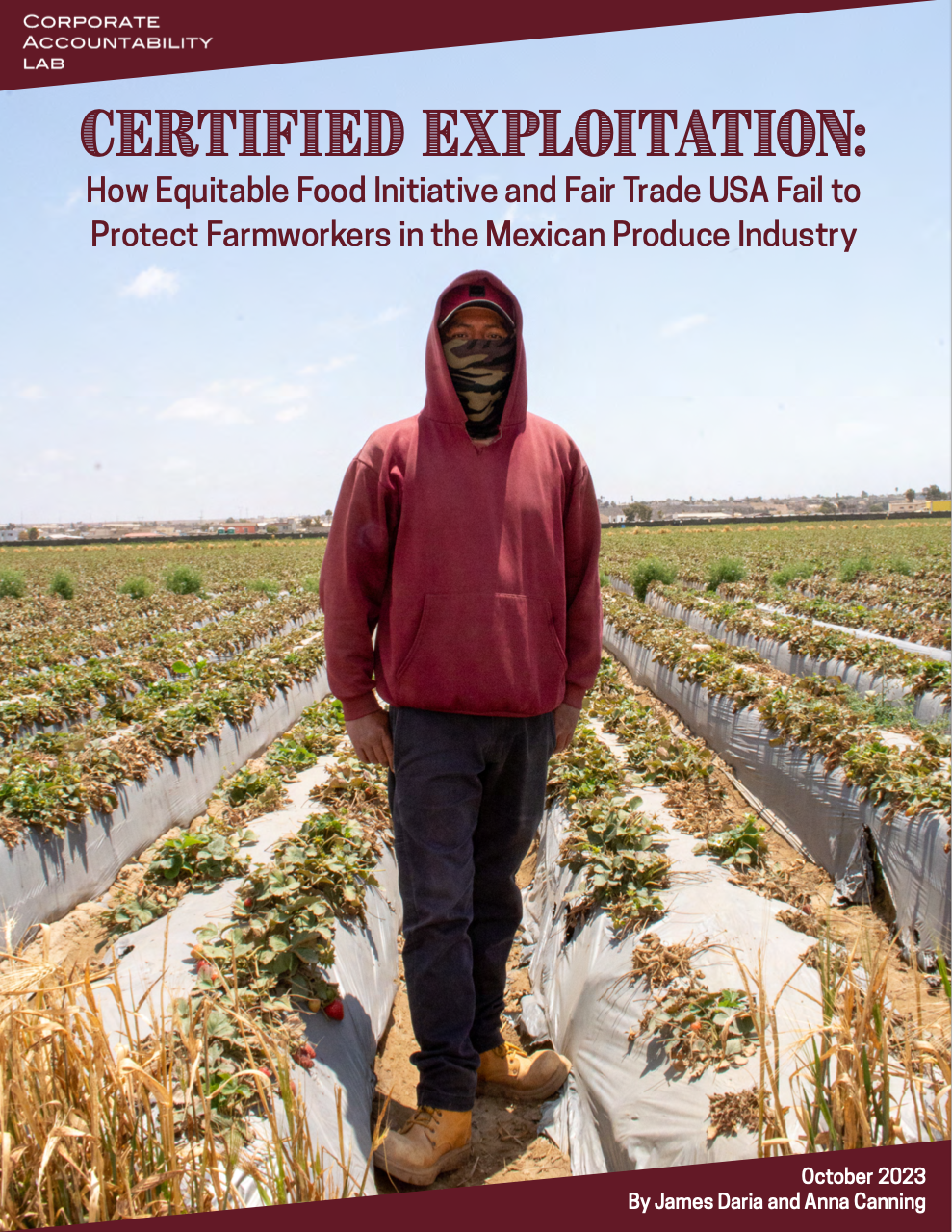
This report, written by Dr. James Daria and Anna Canning, examines human and labor rights abuses in the agro-export enclave of Mexico’s San Quintín. Workers report systematic abuses in including withholding of wages and identity documents, forced overtime, and degrading living conditions, even on ethically certified farms. Through sustained ethnographic research, this report gathers the words of workers on plantations selling to Driscoll’s and Andrew & Williamson Fresh Produce, plantations that are certified “fair trade” by Fair Trade USA and “Responsibly Grown, Farmworker Assured” by the Equitable Food Initiative. Over 200 interviews with workers helped shape the findings of this report, which belie the claims of both brands and certifiers about product sustainability and show how multi-stakeholder initiatives often fail to protect human rights. While the full report is currently only available in English, the executive summary is available in English and Spanish.

September 2023
For decades, cocoa and chocolate companies have plundered the wealth of Côte d’Ivoire and Ghana. This report, available in both English and French, highlights the varied threats that cocoa farmers and their communities face – including the exceedingly low prices for cocoa that companies pay; diseases that decimate cocoa trees; and illegal gold mining. The failure by companies to pay a fair price for cocoa contributes directly to the human rights and environmental harms that characterize the West African cocoa sector – and despite promises by many of the largest chocolate companies over two decades ago to clean up the sector, little has changed.
November 2022
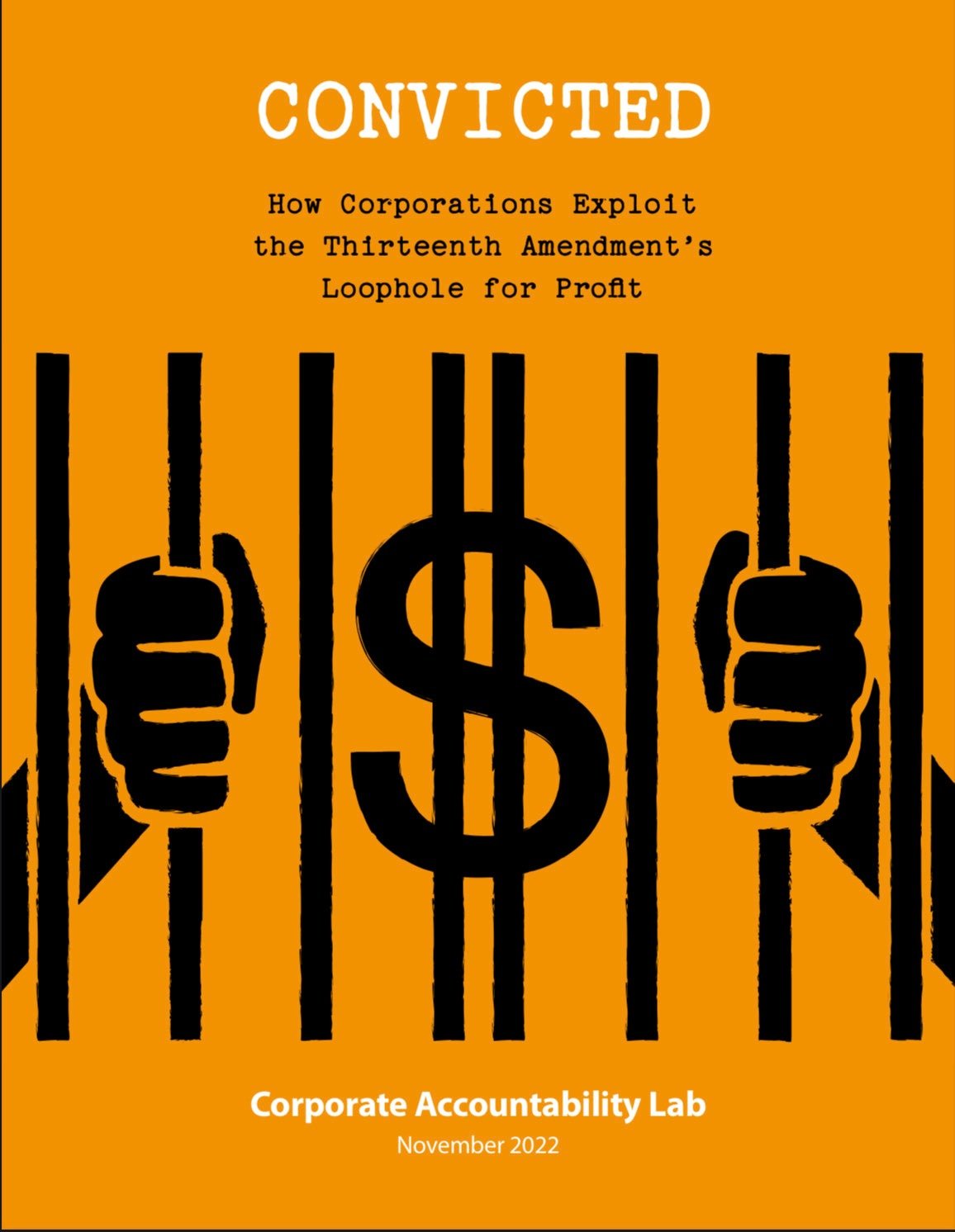
This report exposes the depth of corporations’ involvement with the US prison labor industry. Forced labor continues to exist — and is legal under state and federal law — due to a simple clause in the 13th Amendment to the United States Constitution, a mere 14 words that provide the basis for a system that incentivizes mass incarceration, racial injustices, and corporate exploitation. We believe that the US prison labor industry is in violation of international law, and recommend several short term actions to improve the lives of incarcerated people. However, no amount of protection can rid the prison system of forced labor indicators like abuse of vulnerability, restriction of movement, and isolation. These are inherent qualities of incarceration in the United States, impossible to reform and addressable only by abolition.

December 2021
In the spring of 2020, the COVID-19 pandemic upended global trade. Cocoa farmers’ livelihoods, precarious in normal times, became even more uncertain. For decades, multinational companies have reaped massive profits while cocoa farmers have earned poverty wages. Farmers are often unable to support their families on such low incomes, much less pay adult workers fair wages. As a result of these, farmers generally hire migrant workers at very low wages, rely on their children to help on the farms, or, in some cases, buy trafficked children. This report, available in English and French, examines the impact of the COVID-19 pandemic on cocoa farmers and their community, focusing on the impact on the price of cocoa and the cocoa supply chain; the impact on farmer poverty; and the impact on child trafficking into Cote d’Ivoire and child labor.

June 2021
In 2019, Ghana received a USD 600 million syndicated loan from the African Development Bank and other private lenders to maximize cocoa production and improve farmers’ livelihoods. As a prerequisite for obtaining the loan, COCOBOD, the government agency that runs Ghana’s cocoa industry, established an Environmental and Social Management System (ESMS) with a grievance and redress mechanism. This report examines COCOBOD’s ESMS and its component grievance and redress mechanism, finding that the grievance and redress mechanism could be a powerful tool for cocoa farmers, workers, and their communities.

January 2021
This article examines whether including language in supplier contracts that create legal rights for workers to enforce codes of conduct would improve labor rights performance. It looks at what such language might look like and how it would operate, and provides a case study, where 14 US companies agreed to include such language in their supply chain contracts.

2020
Corporations or individuals in the United States sometimes have information that is useful or necessary to a case in a court or tribunal outside the United States. The U.S. Foreign Legal Assistance (FLA) Statute, 28 U.S.C. § 1782 (also known as “Section 1782”), may offer a way for those with an interest in the case to obtain that information. This practical guide, available in English and Spanish, provides a detailed overview of how the statute may be used, and is geared toward lawyers and advocates outside of the United States involved in legal processes that may implicate a US person or company.

March 2020
This paper, authored by CAL Innovation Fellow Dr. Zobaida Khan, explores whether participation in transnational safety initiatives after Rana Plaza resulted in improved social compliance. It is based on survey responses from factory managers and oral interviews with three prominent Bangladeshi union leaders and labor activists. Among the insights drawn from this research, Dr. Khan finds that while some initiatives did have a positive impact on building safety, their impact on social compliance, including labor rights, was much more limited. She also finds that power imbalances in supply chains are key drivers of abuses, and lead to problematic outcomes that plague Bangladeshi garment supply chains: prices are too low, timelines are too short, and social compliance is often realized only on paper.

July 2019
Between October 2018 and March 2019, Corporate Accountability Lab (CAL) staff interviewed farmers, tribal leaders in cocoa-growing villages, cocoa cooperatives and local and international NGOs to assess the impact of Corporate Social Responsibility (CSR) efforts in the industry, and to identify the root causes of the serious and ongoing problems in the cocoa sector: child labor, trafficking and deforestation. What we saw was appalling: CSR efforts have had a nearly imperceptible impact on the lives of cocoa farmers and their communities.