On March 11, 2026, Corporate Accountability Lab and Toxin Free USA filed a lawsuit against seafood giant Aqua Star under Washington, D.C.’s Consumer Protection Procedures Act (CPPA), alleging that the company falsely advertises its farmed shrimp products as “responsibly sourced” and “sustainably sourced.” According to the complaint, Aqua Star sources shrimp from facilities linked to exploitative labor conditions and environmentally destructive practices that have been widely documented in the Indian shrimp industry. The lawsuit alleges that these practices conflict with the Aqua Star’s marketing claims that its shrimp are responsibly and sustainably produced.
The complaint also challenges Aqua Star’s marketing of its shrimp as “pure.” As stated in the lawsuit, Aqua Star shrimp products have been recalled multiple times due to potential contamination with Cesium-137, a man-made radioactive isotope. Additionally, shipments of shrimp from an Aqua Star supplier have been refused entry to the U.S. on multiple occasions due to the presence of banned antibiotics.
Aqua Star sells its shrimp throughout the United States and Washington, D.C., including at Target, Giant, Balducci’s, Safeway, Save A Lot, Harris Teeter, and Kroger.
CAL and TFUSA believe it is essential to raise public awareness of exploitative labor conditions and harmful environmental practices in the farmed shrimp industry—especially in India, the largest supplier of shrimp to the United States. Companies like Aqua Star tell consumers that these products are ethically sourced and produced in an environmentally sustainable manner, while reaping the financial benefits of low-cost shrimp linked to exploitative labor practices and environmental degradation. Aqua Star’s marketing misleads consumers who are trying to make ethical purchasing decisions..
To learn more about the case, you can read the complaint, CAL’s and Toxin USA’s press release, and a fact sheet.
The Indian Shrimp Sector
In March 2024, CAL released a groundbreaking report, Hidden Harvest: Human Rights and Environmental Abuses in India’s Shrimp Industry, documenting abusive labor and environmental practices in the Indian shrimp sector. The report focused on the harms from the shrimp aquaculture industry in the Indian eastern coastal state of Andhra Pradesh, which has become the epicenter of the multi-billion dollar sector.
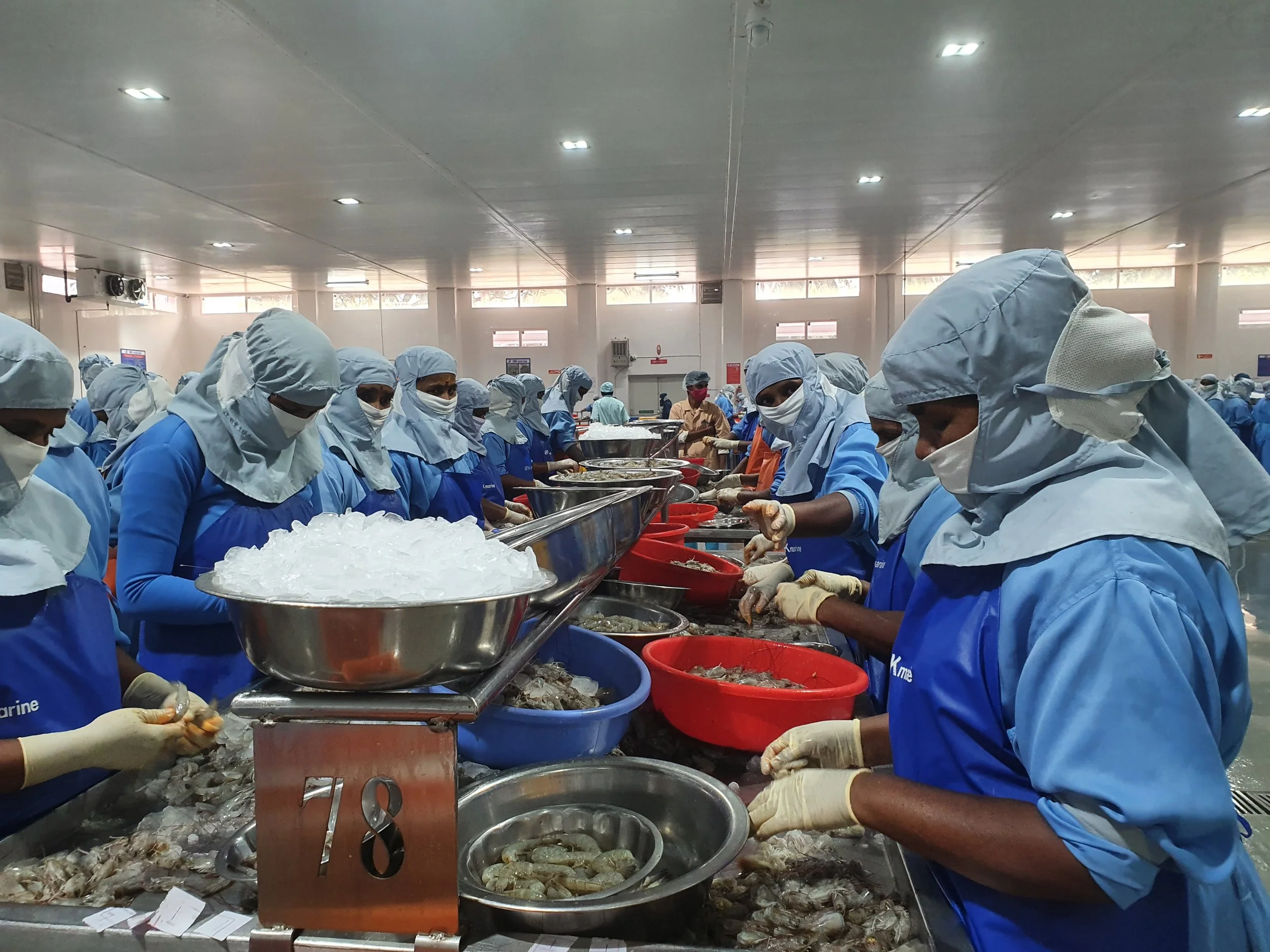
CAL’s investigation revealed that shrimp aquaculture workers overwhelmingly come from vulnerable backgrounds, primarily from lower castes and fisher communities, and many are migrant workers from other Indian states. Migrant workers, especially, are at a high risk of forced labor. Reported working conditions were often dangerous, with workers holding and peeling frozen shrimp for hours, resulting in frostbite on their fingers. Workers living in on-site housing described restricted movement, with guards watching and securing the facility; in some cases, workers reported only being allowed to leave the facility once a week or month. There are also reports of companies’ connection with debt bondage.
Aqua Star sources shrimp directly from Nekkanti Sea Foods, an Indian shrimp company that is reported to perpetuate many of these human rights abuses among its workers, including multiple indicators of forced labor. Nekkanti is by no means an outlier in the Indian shrimp industry; abusive working conditions are endemic across the country in all sectors and sizes of companies. Additional reporting from the Associated Press, CNN, and the Outlaw Ocean Project confirmed that forced labor is widespread in the Indian shrimp sector.
Moreover, in 2024 the U.S. Department of Labor (DOL) added shrimp from India to its List of Goods Produced by Child Labor or Forced Labor. The U.S. State Department has also stated that: “Observers report indicators of forced labor—including failure to pay a minimum wage, restricted freedom of movement, and dangerous working conditions—in some shrimp and aquaculture facilities, particularly in Andhra Pradesh. The exploitative conditions in these aquaculture facilities also creates debt bondage, especially among migrant workers and scheduled castes.” It is clear that sourcing shrimp from India comes with a high risk that it was produced with forced labor, and therefore companies should be carrying out heightened due diligence of their suppliers, especially if they claim their shrimp products are responsibly and/or ethically sourced.
Aqua Star Should Live up to its Marketing Promises
Consumers want to buy ethical products; they don’t want to support unethical practices such as forced labor or the destruction of communities’ water supplies. Companies know this and take advantage of it in their marketing. To consumers, “responsible” and “sustainable” mean they can be confident that the workers who peeled the shrimp were treated and paid decently and the shrimp farms are safe, both for workers and for communities nearby. Yet here, that confidence is patently misplaced.
CAL urges Aqua Star to take an honest look at its shrimp supply chain and require their suppliers to improve their labor and environmental practices—or, at the very least, Aqua Star must stop telling consumers that its shrimp is responsibly and sustainably sourced.
CAL and Toxin Free USA are represented by Richman Law & Policy.
